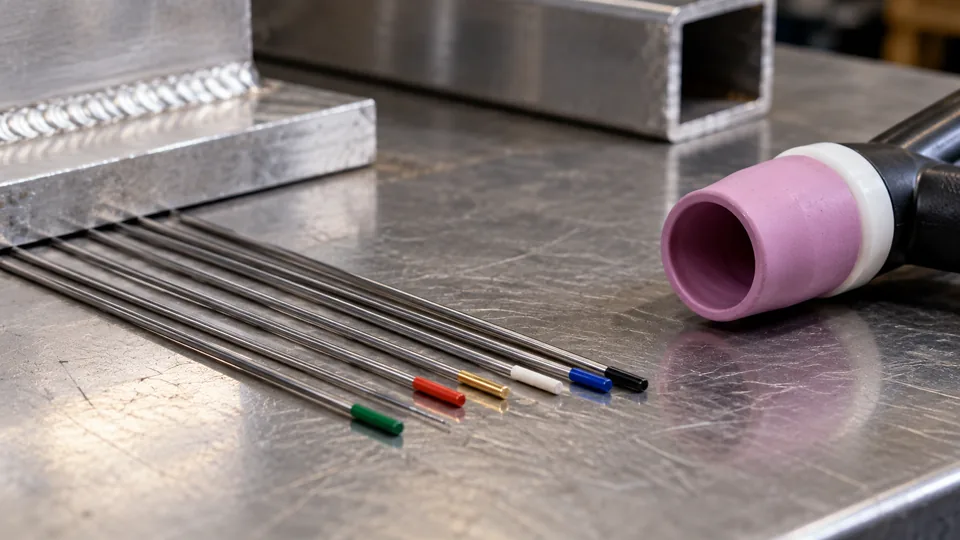
For conventional AC TIG welding of aluminum, green pure tungsten is the traditional electrode choice. For many modern inverter TIG machines, however, 2% lanthanated tungsten, usually identified by a blue band, is also widely used for aluminum. Zirconiated tungsten, commonly identified by a white or brown color depending on the classification system, is another AC option.
Color provides a quick identification method, but it should not be the only basis for selection. The electrode’s composition, diameter, welding current, AC waveform, and machine recommendations all affect performance.
Common Tungsten Colors for Aluminum TIG Welding
| Color or identification | Typical classification | General aluminum TIG use |
|---|---|---|
| Green | Pure tungsten, EWP | Traditional choice for conventional AC TIG welding |
| Blue | 2% lanthanated tungsten, EWLa-2 | Versatile AC/DC option, including inverter AC |
| White or brown | Zirconiated tungsten, such as EWZr classifications | AC welding, especially where good resistance to contamination and a stable arc are needed |
| Orange, gray, gold, or other colors | Ceriated, rare-earth, or other lanthanated classifications | May work on AC, but the exact composition and manufacturer guidance should be checked |
Color codes can vary by standard, manufacturer, and market. Read the package label or technical data sheet if the band color is unclear. A blue electrode from a reputable supplier commonly indicates EWLa-2, but color alone does not prove the composition.
Why Aluminum Usually Requires AC TIG
Aluminum quickly develops a tenacious oxide layer. This oxide melts at a substantially higher temperature than the aluminum beneath it. AC TIG welding helps balance two functions: the electrode-negative portion of the cycle provides useful penetration and electrode cooling, while the electrode-positive portion assists with oxide disruption at the surface.
The exact cleaning action depends on the machine’s AC balance, waveform, frequency, current, and joint condition. Aluminum TIG welding is therefore different from conventional stainless steel TIG welding, which commonly uses DCEN. The electrode selected for aluminum must suit the machine’s AC output rather than being chosen solely by its color.
Green Pure Tungsten: The Traditional Aluminum Choice
Pure tungsten is identified by a green color band under the traditional AWS classification system. It was widely used with conventional transformer-based AC TIG equipment because it could form a rounded tip during AC welding. That rounded end helped support a stable arc with older machines and traditional aluminum welding practices.
Pure tungsten has limitations. It generally has a lower current-carrying capability than several alloyed electrodes, and its arc performance can be less favorable on some modern inverter machines. A pure tungsten electrode can also become excessively rounded or unstable if the current and preparation do not suit the diameter.
Green tungsten can still be appropriate when:
- The TIG machine manufacturer permits or recommends it.
- The machine uses conventional AC output.
- The welding procedure calls for a rounded electrode end.
- The electrode diameter matches the selected current.
Blue 2% Lanthanated Tungsten on Aluminum
Blue-banded 2% lanthanated tungsten, classified as EWLa-2, is a common choice for modern AC/DC TIG equipment. Its arc-starting and arc-maintenance characteristics make it suitable for many inverter applications, and it can be used with a pointed or lightly truncated tip when the machine and procedure call for that preparation.
Lanthanated tungsten is also useful for shops that weld both AC and DC materials. The same electrode type can often serve aluminum on AC and steels or nickel alloys on DC, provided the diameter and preparation are appropriate. That flexibility does not mean every blue electrode is automatically the best option for every aluminum joint.
Follow the welding machine and electrode manufacturer’s recommendations for:
- AC waveform and balance settings.
- Electrode diameter.
- Tip preparation.
- Maximum operating current.
- Shielding gas and flow settings.
Zirconiated Tungsten for AC Aluminum Welding
Zirconiated tungsten contains zirconium oxide and is intended primarily for AC welding. It is often selected for aluminum and magnesium because the added oxide can help the electrode resist contamination and maintain a stable end under AC conditions.
Color identification for zirconiated electrodes is not as universally recognized by casual users as green or blue. Depending on the classification and supplier, a zirconiated electrode may have a white or brown band. Check the classification printed on the package rather than relying on the color alone.
Zirconiated tungsten can be a sensible AC choice for higher-current work, but its suitability still depends on diameter, current waveform, cooling, and the equipment manufacturer’s guidance.
Does the Electrode Need a Ball for Aluminum?
Older aluminum TIG practices often called for a small rounded end on pure tungsten. Modern inverter machines commonly allow more control over the AC waveform, so many procedures use a pointed or truncated electrode instead. A sharply pointed electrode can produce an arc that is too concentrated or may deteriorate quickly under unsuitable AC conditions. A large uncontrolled ball can wander, contaminate the weld, or destabilize the arc.
The proper end shape depends on the electrode composition and the TIG machine. Use a dedicated tungsten grinding wheel or grinder that will not introduce contaminants from other metals. Grind longitudinally along the electrode rather than across it, and follow the electrode manufacturer’s preparation guidance.
How to Select the Diameter
Electrode diameter affects current capacity, arc control, and the likelihood of overheating. A smaller electrode can provide more precise control at lower current, while a larger electrode tolerates higher current. The correct size also depends on electrode composition, AC balance, waveform, joint design, and shielding conditions.
Use the manufacturer’s current chart as the starting point. Avoid selecting a diameter from a general chart without checking its operating conditions. A chart for pure tungsten on conventional AC may not apply directly to 2% lanthanated tungsten on inverter AC.
For a practical selection process:
- Identify whether the machine uses conventional transformer AC or inverter AC.
- Check the machine manufacturer’s recommended electrode types.
- Confirm the electrode classification from the package.
- Select the diameter from the electrode manufacturer’s chart for the intended current and polarity.
- Prepare the tip according to the specified AC waveform and electrode type.
- Test arc stability on clean scrap of the same or similar aluminum grade.
Once you know which electrode type and diameter suit your machine, compare specific options in our guide to the best tungsten for aluminum TIG welding.
Why Tungsten Contamination Happens on Aluminum
Tungsten contamination usually occurs after the electrode touches the workpiece or molten weld pool. Aluminum oxide, base metal, and other surface contaminants can adhere to the hot electrode. A contaminated tip may produce an erratic arc, excessive wandering, or visible inclusions in the weld.
If contact occurs, stop welding and allow the electrode to cool as appropriate for the equipment and procedure. Remove the contaminated section by regrinding the electrode on a clean, dedicated surface. Inspect the collet, collet body, gas lens, and ceramic cup if contamination was severe.
Frequent contamination can also indicate an incorrect torch angle, excessive arc length, insufficient shielding, poor fit-up, or an unstable hand position. Aluminum must be cleaned with suitable methods before welding, and the oxide layer should be managed without transferring oil, moisture, or abrasive residue into the joint.
Safety Points for Aluminum TIG Welding
The tungsten color does not make TIG welding safe by itself. Use appropriate eye and skin protection for the arc intensity, protect against hot metal, and maintain adequate ventilation. Shielding gas can displace oxygen in confined areas, so avoid welding in poorly ventilated spaces without proper controls.
Grinding tungsten creates fine dust. Use suitable ventilation and respiratory protection practices for the material being ground. If using thoriated tungsten, verify the electrode classification before grinding. Thorium-containing electrodes require additional attention to dust control, and their grinding residue should not be treated as ordinary harmless debris.
Quick Answer by TIG Machine Type
- Conventional transformer AC: Green pure tungsten is the traditional choice. Zirconiated tungsten may also be suitable.
- Modern inverter AC: Blue 2% lanthanated tungsten is commonly suitable, while zirconiated tungsten may also be recommended for AC work.
- One electrode for aluminum and steel: Blue 2% lanthanated tungsten is often practical because it supports both AC and DC applications, subject to the manufacturer’s instructions.
- Uncertain color or unlabeled electrode: Do not assume its composition. Confirm the classification before using it for a critical weld.
For most readers, the practical answer is green pure tungsten for traditional AC equipment and blue 2% lanthanated tungsten for many modern inverter TIG machines. White or brown zirconiated tungsten can also suit AC aluminum welding. Match the electrode to the machine, diameter, tip preparation, and welding procedure rather than treating one color as universally correct.
