
A Pinewood Derby car can look sleek, roll smoothly, and still come in under the race limit. That last detail is where many builds lose valuable weight. Tungsten weights help place more mass inside a compact wooden body, leaving room for axles, wheels, and a carefully positioned center of gravity. The challenge is choosing a format that fits the car rather than buying the heaviest-looking kit and hoping it works.
Builders commonly overlook three details: the size of each weight, the space available for drilling, and how much adjustment remains after paint and hardware are installed. A set of half-ounce cylinders may suit a roomy rear cavity, while eighth-ounce or sixteenth-ounce pieces give finer control near the final weigh-in. Solid weights also require more planning than moldable putty, especially if the car has already been shaped. Local rules matter too, since a common five-ounce limit is not universal.
The Red Dirt Derby 3 oz set is the strongest overall fit here because its mix of half-ounce, quarter-ounce, and eighth-ounce pieces offers useful placement flexibility in a compact 3/8-inch format. Other picks make more sense for last-minute tuning, large rear cavities, family projects, or builders who want a broad selection of increments. The best set depends on how much room your car has and how precisely you need to approach the legal limit.
Quick Answer
- Best Overall: Red Dirt Derby 3 oz Tungsten Incremental Weights for a balanced mix of weight sizes and placement options.
- Best for Fine Adjustments: MUUNN 1/16 oz Cylindrical Tungsten Weights for small corrections near the final weigh-in.
- Best for Last-Minute Tuning: 2.5 oz Tungsten Weight Canopy with 0.5 oz Tungsten Putty for adjustable weight distribution without additional drilling.
- Best for a Broad Size Mix: Pinewood Pro Tungsten Cylinder Weights for builders who want incremental 3/8-inch cylinders.
Best Tungsten Weights for Pinewood Derby Comparison Table
| Product | Best For | Weight Format | Diameter or Style | Main Advantage |
|---|---|---|---|---|
| Red Dirt Derby 3 oz | Most builders | 1/2, 1/4, and 1/8 oz pieces | 3/8-inch | Balanced adjustment range |
| MUUNN 1/2 oz Cylinders | Large cavities and rear placement | Ten 1/2 oz cylinders | Cylindrical | Quickly adds substantial weight |
| MUUNN 1/16 oz Cylinders | Fine corrections | Ten 1/16 oz cylinders | Cylindrical | Smallest stated increment |
| MUUNN 1/4 oz Cylinders | Simple mid-range tuning | Ten 1/4 oz cylinders | Cylindrical | Easy repeatable additions |
| Tungsten Canopy and Putty Kit | Adjustable installation | 2.5 oz canopy plus 0.5 oz putty | Canopy and moldable putty | Last-minute flexibility |
| MUUNN 1/8 oz Cylinders | Moderate fine-tuning | Ten 1/8 oz cylinders | Cylindrical | More control than half-ounce pieces |
| Tungsten Derby Car Weights | Family building projects | Ten 1/2 oz cylinders | Drill-in cylinders | Clear installation guidance |
| Pinewood Pro Cylinder Weights | Incremental cylinder tuning | 2 oz set with multiple pieces | 3/8-inch, chamfered cylinders | Compact installation format |
| Reaction Tackle Tungsten Putty | Tool-free adjustment | 2 oz moldable putty | Flexible putty | Can be reshaped and removed |
The reviews below focus on weight increments, installation style, available adjustment, and the type of Pinewood Derby build each product suits.
1. Red Dirt Derby 3 oz Tungsten Incremental Weights: Best Overall

A builder who has already drilled the rear cavity knows how quickly a simple weight plan can become awkward. One half-ounce piece may leave the car heavy, while a large empty space wastes the room you worked to create. This Red Dirt Derby kit addresses that problem with five half-ounce pieces, one quarter-ounce piece, and two eighth-ounce pieces. The 3/8-inch diameter gives the set a consistent installation format, while the mixed increments make the final scale reading easier to manage.
The set contains a stated total of 3 ounces, leaving room for the wooden body, wheels, axles, paint, and any additional hardware. The pieces can support a build that needs substantial rear mass early in the process, followed by smaller corrections near completion. The listing identifies the metal as non-toxic, though the product information does not establish a specific alloy or purity. For a first serious build, this is the most balanced package in the group.
Pros
- Includes three useful weight increments.
- Provides five half-ounce pieces for substantial placement.
- Includes quarter-ounce and eighth-ounce pieces for adjustment.
- Uses a consistent stated 3/8-inch diameter.
- Offers a stated total of 3 ounces.
Cons
- The set does not include drilling or installation tools.
- The product information does not identify the exact tungsten composition.
This set suits builders who want one package for both bulk loading and final tuning. A dedicated fine-increment set may be better for a nearly finished car that needs only tiny corrections, while a half-ounce-only package may be faster for a large open cavity.
To buy this product, click here.
2. MUUNN 1/2 oz Cylindrical Tungsten Weights: Best for Large Cavities

Half-ounce cylinders are useful at the stage when a car needs a meaningful amount of added mass and the available cavity has enough length or depth to accept repeated pieces. This MUUNN package contains ten pieces at that increment, giving the builder a straightforward way to add weight in consistent steps. The cylindrical shape is intended for prepared holes or slots, so the body needs to be planned around the weight diameter before the paint goes on.
The listing describes the pieces as compact and suitable for positioning toward the rear of a Pinewood Derby car. That placement can be useful for builders following a rear-weighting plan, but the final balance still depends on the car’s geometry and local race rules. This package is less subtle than a mixed-size kit. It works best when the builder already knows how much space is available and wants repeatable half-ounce additions rather than a wide range of tiny corrections.
Pros
- Includes ten cylindrical weights at 1/2 ounce each.
- Uses a compact format for prepared holes or slots.
- Supports repeated additions of the same size.
- Is intended for Pinewood Derby and similar car projects.
- Can suit a planned rear-weight installation.
Cons
- Half-ounce increments offer less fine control than smaller pieces.
- Drilling and adhesive are not included.
Choose this package for a roomy design with a clear weight target. The Red Dirt mixed kit is easier to fine-tune, while the MUUNN 1/16-ounce version is better for a car already close to its final scale reading.
To buy this product, click here.
3. MUUNN 1/16 oz Cylindrical Tungsten Weights: Best for Fine Adjustments

Near the end of a build, a small adjustment can matter more than another large weight. The MUUNN 1/16-ounce cylinders are aimed at that delicate stage, with ten identical pieces that can be added one at a time. Their compact cylindrical shape is intended to fit prepared openings in the wooden body, allowing a builder to keep additions organized instead of pressing loose material into an improvised cavity.
The set is also useful for a car with limited space around the rear axle area. Smaller pieces may fit where a quarter-ounce or half-ounce cylinder would interfere with the body shape, although the listing does not provide complete dimensional measurements beyond the cylindrical format. The trade-off is obvious: reaching a larger total weight with small increments takes more pieces and more installation planning. This is a tuning tool rather than a bulk-loading kit.
Pros
- Provides ten pieces at a small 1/16-ounce increment.
- Supports precise additions near the race limit.
- Uses a cylindrical form for prepared holes or slots.
- Can help fill small available spaces.
- Is intended for Pinewood Derby car projects.
Cons
- Small increments are less efficient for adding large amounts of weight.
- The listing does not provide full dimensional measurements.
This is the pick for careful scale work, especially after the main weight has already been installed. Builders starting with an empty body will likely prefer a mixed kit or half-ounce cylinders, then reserve small pieces for the final adjustment.
To buy this product, click here.
4. MUUNN 1/4 oz Cylindrical Tungsten Weights: Best for Mid-Range Tuning

Quarter-ounce pieces sit in a useful middle ground. They add enough mass to make steady progress toward a race limit, yet they are easier to sequence than a collection of half-ounce blocks. This MUUNN set supplies ten matching cylinders, which can help a builder keep the installation pattern predictable across the rear of a car or along a central cavity.
The product information describes the weights as suitable for common Pinewood Derby car models and prepared holes made with an appropriate drill bit. That means the body design needs to account for the cylinders before assembly is finished. Since all ten pieces share the same size, the package is simple to plan but less adaptable than a mixed-increment kit. It makes sense for a builder who values orderly additions and has already chosen a weight layout.
Pros
- Includes ten quarter-ounce cylindrical pieces.
- Offers a middle increment between eighth-ounce and half-ounce options.
- Supports consistent placement across prepared openings.
- Is intended for common Pinewood Derby car formats.
- Can simplify a repeatable installation plan.
Cons
- The single-size package lacks the flexibility of mixed increments.
- An appropriate cavity and drill bit are required for concealed installation.
This package fits builders who want predictable quarter-ounce steps without sorting several sizes. A mixed Red Dirt set is more adaptable for uncertain layouts, while the 1/16-ounce MUUNN set gives better control over the final few adjustments.
To buy this product, click here.
5. 2.5 oz Tungsten Weight Canopy with 0.5 oz Tungsten Putty: Best Adjustable Kit
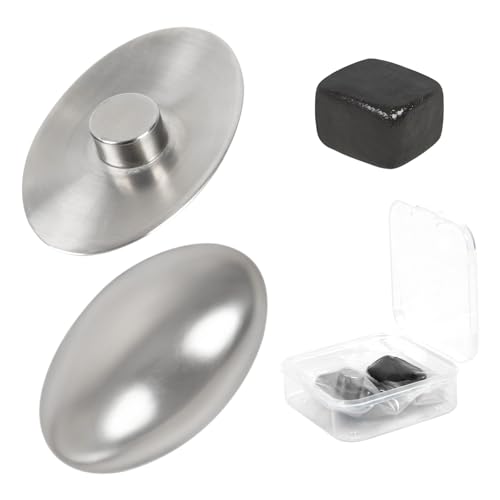
Solid cylinders are tidy once installed, but they commit the builder to a particular cavity and placement plan. This kit takes a different route by combining a stated 2.5-ounce tungsten canopy with 0.5 ounce of moldable tungsten putty. The canopy supplies a larger fixed component, while the putty can be pinched, repositioned, or removed as the car’s weight changes after painting and hardware installation.
That flexibility is especially useful for a family project where the car is weighed several times during construction. The product information says the putty can be adjusted without additional drilling or gluing, which reduces the risk of cutting another pocket into a finished body. The listing does not establish the canopy’s dimensions or explain the exact mounting method, so the body still needs a practical installation plan. Think of this as an adjustable system rather than a universal drop-in part.
Pros
- Combines a stated 2.5-ounce canopy with 0.5 ounce of putty.
- Provides moldable material for fine weight distribution.
- Allows adjustments without additional drilling according to the listing.
- Can support last-minute changes after paint and hardware are added.
- Offers a different installation approach than solid cylinders.
Cons
- The canopy dimensions and mounting method are not clearly specified.
- Builders wanting a fully concealed drilled-cylinder layout may prefer a conventional set.
This kit suits builders who expect repeated weigh-ins or want to avoid permanent drilling for every small change. A cylinder set is easier to plan around exact holes, while this combination offers more freedom after the car is nearly complete.
To buy this product, click here.
6. MUUNN 1/8 oz Cylindrical Tungsten Weights: Best for Moderate Fine-Tuning

An eighth-ounce increment is small enough for useful corrections but large enough to avoid filling a cavity with a long line of tiny pieces. This MUUNN package contains ten matching cylinders, giving builders a repeatable way to add weight after the main body has been shaped. The format is especially practical for a car that is close to its target but still needs several measured additions.
The cylinders are intended for prepared slots or holes and can be concealed inside the body when the cavity is planned correctly. The listing presents them as compact weights for common Pinewood Derby models, but it does not give complete measurements or an installation tool. That leaves the builder responsible for confirming fit before drilling. Compared with the 1/16-ounce version, this set reaches the target faster. Compared with quarter-ounce pieces, it gives a gentler correction.
Pros
- Includes ten pieces at an eighth-ounce increment.
- Offers a useful middle ground for final weight adjustments.
- Uses a cylindrical design for prepared openings.
- Can be concealed inside a planned wooden body.
- Supports repeated additions of the same measured size.
Cons
- The listing does not provide complete cylinder dimensions.
- Drilling and installation supplies are not included.
Pick this set if quarter-ounce additions feel too coarse and sixteenth-ounce pieces feel too slow. The Red Dirt kit offers more size variety, but this single-increment package keeps the installation plan simple.
To buy this product, click here.
7. Tungsten Derby Car Weights, 1/2 oz Cylinders: Best for Family Builds

This package is presented specifically around the shared Pinewood-style car project, where a parent and young racer may be measuring, drilling, and tuning together. The ten cylinders are each identified as 1/2 ounce, giving the build a straightforward counting system. A child can understand the basic rhythm of adding one piece, weighing the car, and deciding whether another piece belongs in the prepared cavity.
The product information clearly says that the package contains weights only. The car body, wheels, axles, glue, drill bit, ruler, and center-of-gravity stand are separate, so the buyer should plan for those supplies before starting. That clarity is useful for a family project, though it also means this is not an all-in-one kit. The listing describes the material as solid tungsten alloy, rather than establishing pure tungsten composition.
Pros
- Includes ten stated 1/2-ounce cylinders.
- Is presented for Pinewood-style family projects.
- Uses a drill-in cylinder format.
- Clearly identifies several tools and parts that are not included.
- Supports counting-based weight adjustments.
Cons
- The package includes weights only, with no car-building tools.
- Half-ounce pieces provide less precision than smaller increments.
This option works for a family that wants a simple, hands-on installation plan and already has the required tools. A mixed-size kit is more forgiving for a tight final weigh-in, while this package keeps the physical build easy to explain and organize.
To buy this product, click here.
8. Pinewood Pro Tungsten Cylinder Weights: Best Compact Cylinder Set

The Pinewood Pro set focuses on a conventional concealed-cylinder installation. Its stated 3/8-inch diameter matches the common drill size described in the product information, and chamfered edges are intended to help the pieces slide into prepared holes. That combination may appeal to a builder who wants to drill, insert, cover the openings with wood filler, and finish the exterior without leaving the weights visible.
The set is identified as a 2-ounce package with multiple pieces, although the supplied listing information contains conflicting wording about the exact piece count. That uncertainty deserves attention before purchase. The product information also describes the pieces as incremental, which supports measured placement rather than one large permanent block. It is a compact format for a carefully planned body, but buyers should confirm the exact package contents and local rules before cutting the car.
Pros
- Uses a stated 3/8-inch cylinder diameter.
- Has chamfered edges for insertion into prepared holes.
- Supports concealed installation under wood filler and paint.
- Is presented as an incremental Pinewood Derby weight set.
- Offers a compact format for limited body space.
Cons
- The supplied product information is inconsistent about the exact piece count.
- The stated 2-ounce total may require another weight source for a five-ounce build.
This set is a reasonable fit for a builder who values a neat 3/8-inch drilled installation and needs a smaller starting package. The Red Dirt 3 oz kit offers more total mass and a clearer mix of increments, while the Pinewood Pro set may suit a lighter or partially weighted design.
To buy this product, click here.
9. Reaction Tackle Tungsten Putty: Best for Tool-Free Adjustment

Putty changes the timing of the build. Instead of deciding every hole location before the car is painted, the builder can pinch off a portion, press it into a drilled pocket or under the chassis, and weigh the car again. The supplied product information describes this 2-ounce black putty as moldable and reusable, which makes it useful for small changes after the body, wheels, and axles are already in place.
Its flexibility also creates a different installation trade-off from cylinders. Putty can occupy irregular spaces that would be awkward to drill, but it does not give the same tidy countable layout as ten identical pieces. The listing also describes uses outside Pinewood Derby cars, including sports equipment and fishing applications. For this roundup, its strongest role is adjustable mass during construction, provided the builder confirms that the final placement complies with local race rules.
Pros
- Provides 2 ounces of moldable tungsten putty.
- Can be pinched off and reshaped by hand.
- Allows weight to be placed in irregular pockets.
- Can be adjusted or removed during the build.
- Offers an alternative to drilling multiple cylinder holes.
Cons
- Putty does not provide the fixed increment system of cylinder sets.
- The listing supports several applications, so Pinewood-specific mounting details are limited.
This is the practical choice for builders who expect repeated adjustments or have very little straight drilling space. A solid mixed-weight kit is easier to document and conceal, while putty is more forgiving during the final stages.
To buy this product, click here.
Buying Guide
Start With Your Race Rules
Many Pinewood Derby events use a five-ounce maximum, but local rules can differ in how weight is measured and where additions may be placed. Check the official rules before drilling. A car that is legal on a home scale may still need a small correction at registration, so leaving a little adjustment room is often more useful than filling every cavity immediately.
Match the Increment to the Build Stage
Half-ounce pieces work well while adding substantial mass. Quarter-ounce and eighth-ounce pieces are easier to manage as the car approaches its target. Sixteenth-ounce cylinders are better suited to small final corrections. A mixed set is the safest choice for an uncertain design, while a single-size pack makes sense when the cavity and weight plan are already known.
Measure the Installation Space
Do not drill from the product title alone. Confirm the stated diameter where available, mark the cavity, and keep the wood strong around the axle area. The Red Dirt and Pinewood Pro products identify a 3/8-inch format, while several other listings describe cylinders without providing complete dimensions. That missing measurement matters before a drill bit touches the body.
Choose Solid Cylinders or Putty
Solid cylinders provide a repeatable layout and can be concealed with filler and paint. Putty is easier to reshape and can occupy uneven spaces, though it gives the builder less of a fixed installation pattern. The canopy-and-putty kit sits between these approaches by combining a larger stated weight component with a moldable portion.
Leave Room for Paint and Hardware
Weight changes during the final stages. Paint, axles, wheels, washers, and other permitted hardware can move the car closer to or beyond the limit. Avoid treating the advertised weight capacity as the finished car weight. A set with smaller pieces, such as the MUUNN 1/8-ounce or 1/16-ounce options, can be helpful after those additions are installed.
Plan for Tools and Adhesive
Most cylinder kits are weights only. Drill bits, glue, rulers, scales, filler, and finishing supplies may need to be purchased separately. The family-oriented cylinder listing states this clearly, while the canopy and putty kit is presented as a more adjustable approach. Read the included-parts information carefully so the build does not stop halfway through installation.
Best Tungsten Weights for Pinewood Derby FAQ
Are tungsten weights suitable for Pinewood Derby cars?
The products in this roundup are marketed for Pinewood Derby or Pinewood-style car projects. Their compact formats allow builders to place weight inside prepared cavities. Check the material description and your event’s rules before installation, since the listings do not establish identical compositions or universal race approval.
What weight size is best for a Pinewood Derby car?
There is no single best increment for every build. Half-ounce pieces add weight quickly, quarter-ounce pieces provide moderate steps, and eighth-ounce or sixteenth-ounce pieces help with final corrections. A mixed set is useful if the car’s available space and finished weight are still uncertain.
Should tungsten weights go near the rear of the car?
Several listings describe rear placement as a possible use, but the ideal location depends on the car’s design, balance, axle position, and race rules. Weight should be installed only after considering the body structure and the builder’s chosen balance plan. Product listings do not guarantee a particular race result from any placement.
Can tungsten weights be hidden inside the car?
Yes, cylinder-style products are intended for prepared holes or slots and can be covered with wood filler and paint when the cavity is planned correctly. The Pinewood Pro listing specifically describes this approach. Confirm dimensions before drilling, since not every product listing provides a complete measurement set.
Is tungsten putty better than solid weights?
Putty is more adjustable because it can be pinched, moved, and reshaped during construction. Solid weights offer a more organized and repeatable installation. Putty suits last-minute tuning and irregular spaces, while cylinders are usually easier to count and document during a structured build.
Do these kits include drills, glue, or scales?
Most do not. The family-oriented cylinder listing explicitly says that the car body, wheels, axles, glue, drill bit, ruler, and center-of-gravity stand are not included. Review each package description and gather a suitable scale and installation supplies before cutting the car.
How close should a car be to the race weight limit?
Follow the official rules and use the scale required or accepted by your event. A common five-ounce limit appears in several product descriptions, but local requirements may differ. Smaller increments or moldable putty can make it easier to correct the final reading without removing a large permanent weight.
Final Verdict
The Red Dirt Derby 3 oz set is the strongest overall recommendation because it combines substantial half-ounce pieces with quarter-ounce and eighth-ounce options in a stated 3/8-inch format. That mix covers the main stages of a Pinewood Derby build, from adding weight to a partially hollow body to making measured corrections near the finish line. Its limitations are straightforward: installation tools are separate, and the listing does not establish a detailed material composition.
Choose the MUUNN 1/16-ounce cylinders for the smallest stated adjustments, the canopy-and-putty kit or Reaction Tackle putty for reshaping weight after construction, and the Pinewood Pro set for a compact drilled-cylinder approach. Half-ounce packages make more sense for larger cavities and simple layouts, while eighth-ounce and quarter-ounce sets offer a more controlled path toward the scale limit. Measure the finished car, confirm local rules, and match the weight format to the space you actually have.
