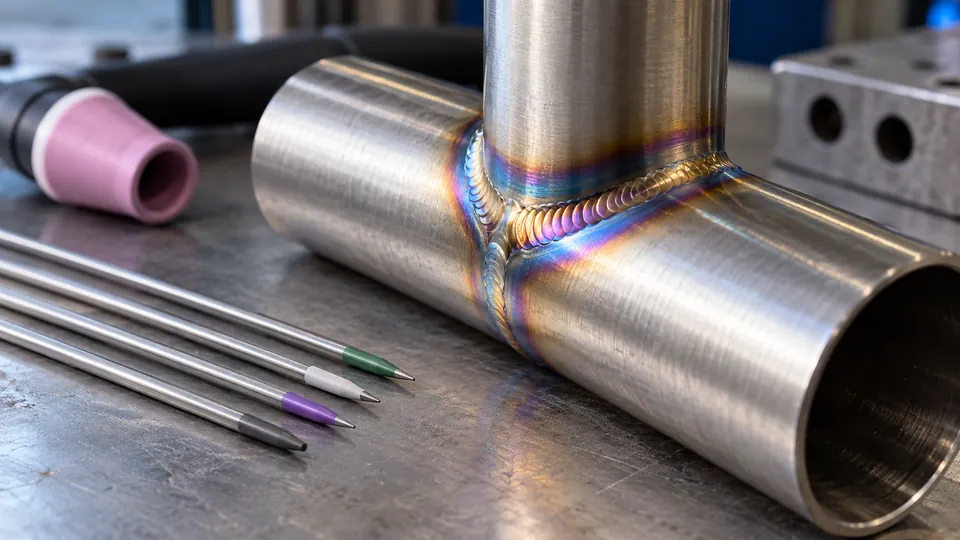
Titanium TIG welding is unforgiving of small setup mistakes. A contaminated tip, an unsuitable electrode diameter, or a composition chosen without regard to current type can turn a clean-looking joint into a gray, unstable mess. That is why welders searching for the best tungsten for titanium TIG welding usually focus on arc stability, tip behavior, diameter, and compatibility with the rest of the torch setup rather than simply buying the most heavily marketed electrode.
The supplied options include 2% lanthanated, rare-earth, ceriated, and red-coded electrodes, with diameters ranging from 0.040 inch to 1/8 inch. Those differences matter. A 1/16-inch electrode suits a different working range and torch setup than a 3/32-inch or 1/8-inch electrode, while a titanium-focused DC job may call for a different choice than a shop that wants one electrode for both AC and DC work. The red ARCCAPTAIN listing also contains conflicting classification details, so its composition should be confirmed before relying on the color alone.
For most titanium TIG buyers, the ARCCAPTAIN blue 2% lanthanated 3/32-inch electrode is the strongest overall fit because its supplied specifications identify the composition, size, AC/DC suitability, and titanium compatibility. Buyers working on smaller parts may prefer a 1/16-inch electrode, while welders seeking an alternative composition can look at the purple rare-earth or gray 2% ceriated options.
Quick Answer
- Best Overall: ARCCAPTAIN Blue 2% Lanthanated 3/32-Inch for its clearly stated titanium, AC, and DC coverage.
- Best for Smaller Torch Setups: YESWELDER Blue 2% Lanthanated 1/16-Inch for its narrower stated diameter and 7-inch length.
- Best Rare-Earth Alternative: ARCCAPTAIN Purple EWG 3/32-Inch for AC/DC use and its non-radioactive rare-earth formulation claim.
- Best Ceriated Option: WelderElite Gray 2% Ceriated 1/16-Inch for buyers who specifically want a ceriated electrode identified for AC/DC TIG work.
Best Tungsten for Titanium TIG Welding Comparison Table
| Product | Best For | Composition | Diameter | Current Compatibility | Notable Feature |
|---|---|---|---|---|---|
| ARCCAPTAIN Blue 2% Lanthanated | Overall titanium TIG use | 2% Lanthanated, WL20/EWLa-2 | 3/32 inch | AC and DC | Lists titanium alloys and vacuum packaging |
| YESWELDER Blue 2% Lanthanated | Smaller electrodes | 2% Lanthanated | 1/16 inch | AC and DC | AWS A5.12M/A5.12:2009 conformance stated |
| ARCCAPTAIN Red Electrode | DC-focused buyers | Red-coded, classification details conflict | 3/32 inch | DC stated | Lists titanium, nickel, copper, and stainless applications |
| ARCCAPTAIN Purple EWG | Rare-earth alternative | Rare-earth blend, EWG | 3/32 inch | AC and DC | Non-radioactive claim and titanium coverage |
| YESWELDER Blue 2% Lanthanated | Portable storage | 2% Lanthanated | 3/32 inch | AC and DC | Sealed aluminum tube with tip protection |
| ARCCAPTAIN Red 1/16-Inch | Compact DC work | Red-coded, classification details conflict | 1/16 inch | DC stated | Vacuum-packed 10-pack |
| Patriot Blue 2% Lanthanated | Standardized blue electrodes | 2% Lanthanated, WL20/EWLa-2 | 3/32 inch | AC and DC | ANSI and AWS standards stated |
| Midwest Tungsten Service Blue | Very small electrode work | 2% Lanthanated, WL20/EWLa-2 | 0.040 inch | AC and DC | Compact diameter and conformance documentation stated |
| WelderElite Gray 2% Ceriated | Ceriated alternative | 2% Ceriated, WC20/EWCe-2 | 1/16 inch | AC and DC | Quick arc-striking claim and titanium coverage |
The individual reviews below put the composition, diameter, current information, and storage details into a more practical buying context.
1. ARCCAPTAIN TIG Tungsten Blue 2% Lanthanated 3/32-Inch — Best Overall

For a titanium TIG setup that needs a broadly useful electrode, this ARCCAPTAIN pack has the clearest all-around specification profile in the group. The listing identifies a blue 2% lanthanated electrode in 3/32-inch diameter and 7-inch length, with AC and DC use listed for titanium alloys alongside aluminum, magnesium, nickel, copper, and low-alloy steels. That combination gives shoppers a straightforward starting point instead of leaving composition or diameter open to interpretation.
The product information also describes resistance to thermal shock, fast arc striking, low burn-off, and arc stability. Those are listing claims rather than independent test findings, but they point toward the practical role of this electrode in a general-purpose TIG drawer. Vacuum packaging is useful for storage, particularly in a shop where consumables may sit between jobs. A 3/32-inch electrode is also a familiar middle-ground size for welders who do not need the very small 0.040-inch option or the heavier 1/8-inch format.
Pros
- Identified as 2% lanthanated, WL20/EWLa-2.
- Lists titanium alloy welding among supported applications.
- Specified for both AC and DC use.
- 3/32-inch by 7-inch size suits buyers seeking a standard mid-size electrode.
- Vacuum packaging is stated for storage protection.
Cons
- The listing does not provide a recommended amperage range.
- The 3/32-inch diameter may be larger than needed for very small titanium parts.
This is the sensible first pick for a buyer who wants one clearly identified 2% lanthanated electrode for titanium work across AC and DC equipment. A smaller torch setup may be better served by the 1/16-inch YESWELDER or the 0.040-inch Midwest option, while buyers seeking a different formulation should look at the purple or ceriated alternatives.
To buy this product, click here.
2. YESWELDER TIG Welding Tungsten 2% Lanthanated 1/16-Inch — Best for Smaller Electrodes

Diameter is the defining reason to choose this YESWELDER pack over a larger 3/32-inch electrode. The supplied specifications identify a 1/16-inch diameter and 7-inch length, giving buyers a compact electrode format for work where a larger rod would be unnecessary. The listing describes the 2% lanthanated formulation as suitable for AC and DC applications and associates it with easier arc starting and lower amperage requirements.
Titanium is not called out in the short feature list as specifically as it is on several ARCCAPTAIN products, so buyers should match the electrode to their machine, procedure, and workpiece requirements rather than treat the AC/DC statement as universal approval for every setup. The stated AWS A5.12M/A5.12:2009 conformance gives the product a clearly presented classification reference. Vacuum packaging and color-coded outer packaging also make it easier to identify and store among several tungsten types.
Pros
- Identified as a blue 2% lanthanated electrode.
- 1/16-inch diameter is clearly specified.
- 7-inch length is clearly specified.
- AC and DC applications are listed.
- AWS A5.12M/A5.12:2009 conformance is stated.
Cons
- The supplied feature information does not specifically list titanium alloys.
- No amperage range or titanium procedure guidance is provided.
Choose this pack when the 1/16-inch format is the deciding factor and your welding procedure supports the stated lanthanated AC/DC application. A 3/32-inch electrode offers a different size choice for broader shop use, while a titanium-specific buyer may prefer a product whose listing names titanium directly.
To buy this product, click here.
3. ARCCAPTAIN TIG Welding Tungsten Red 3/32-Inch — Best for Stated DC Use

This red-coded ARCCAPTAIN electrode is aimed at buyers who are concentrating on DC TIG work. Its supplied application information lists titanium alloys, nickel alloys, copper alloys, and stainless steels, while the current guidance identifies DC use. The 3/32-inch diameter and 7-inch length place it alongside the common mid-size choices in this roundup, making the product relevant to welders who want a red electrode in that format.
There is a specification issue that deserves attention before purchase. The title identifies the item as WT20/EWth-2, while the feature text uses conflicting references, including WL20/EWLa-2. Because those classifications do not communicate the same electrode identity, the red color should not be treated as enough evidence by itself. Buyers who need a precisely verified composition for titanium should confirm the classification with the seller or choose an option whose composition is presented consistently.
Pros
- 3/32-inch diameter and 7-inch length are identified.
- Titanium alloys are included in the stated application list.
- DC use is specifically described.
- Vacuum packaging is stated.
- The pack contains 10 electrodes.
Cons
- The title and feature text give conflicting electrode classifications.
- The supplied information does not establish AC compatibility for this listing.
This option is worth considering only after the classification conflict is cleared up, especially for a titanium procedure where consistent consumable identification matters. If you prefer less ambiguity, the blue lanthanated and gray ceriated listings provide clearer composition labels in the supplied information.
To buy this product, click here.
4. ARCCAPTAIN TIG Welding Tungsten Purple EWG 3/32-Inch — Best Rare-Earth Alternative

The purple ARCCAPTAIN product gives titanium TIG buyers a composition path outside the familiar blue lanthanated electrode. The listing identifies a non-radioactive rare-earth blend, EWG, in a 3/32-inch by 7-inch format. It lists AC and DC applications and names titanium alloys among the supported materials, so the product has a direct connection to the search intent rather than relying on a generic universal claim.
The supplied information describes this formulation as a replacement for traditional 2% thoriated red tungsten. That comparison may appeal to a welder who wants a rare-earth alternative while keeping the same 3/32-inch working size. The product is vacuum packed, and the listing describes resistance to thermal shock and low burn-off. Those statements come from the product information, so buyers should still follow the procedure and preparation guidance appropriate to their own machine and electrode choice.
Pros
- Identified as a non-radioactive rare-earth blend, EWG.
- Lists titanium alloys among supported materials.
- Specified for both AC and DC applications.
- 3/32-inch by 7-inch dimensions are provided.
- Vacuum packaging is stated.
Cons
- The listing does not identify the exact rare-earth additives in the blend.
- No recommended amperage range is supplied.
This is a reasonable fit for buyers who want a purple rare-earth electrode with explicit titanium and AC/DC coverage. A blue lanthanated electrode is easier to compare across the supplied listings because its 2% composition is named directly, while this product is better suited to shoppers who specifically want the EWG formulation.
To buy this product, click here.
5. YESWELDER TIG Welding Tungsten 2% Lanthanated 3/32-Inch — Best Storage Design

This YESWELDER version shares the blue 2% lanthanated identity found in several other selections, but its supplied specifications emphasize the storage container. The 10-pack comes in a sealed aluminum tube with a gasketed lid and a structure intended to protect sharpened tips. For a mobile welder moving between a home shop, service vehicle, and jobsite, that detail can matter more than another broad performance phrase on a package.
The electrode itself is listed as 3/32 inch by 7 inches and suitable for AC and DC applications. The product information also references AWS A5.12M/A5.12:2009 conformance and color-coded packaging. Titanium is not specifically named in the supplied feature list, so the buyer should verify that the electrode and chosen procedure suit the intended titanium work. Its strongest distinction is practical organization and tip protection rather than a different composition.
Pros
- Identified as 2% lanthanated tungsten.
- 3/32-inch diameter and 7-inch length are specified.
- AC and DC applications are listed.
- Sealed aluminum tube is included according to the product information.
- Gasketed lid is described as protecting sharpened tips.
Cons
- The supplied feature list does not specifically name titanium alloys.
- The storage case adds distinction, but the electrode composition overlaps with several other picks.
Buyers who frequently carry tungsten electrodes in a toolbox may prefer this version for its stated aluminum tube and tip-protection details. For a titanium-first purchase, the ARCCAPTAIN blue or purple products provide more direct titanium wording in their listings.
To buy this product, click here.
6. ARCCAPTAIN TIG Welding Tungsten Red 1/16-Inch — Best Compact DC Option

This smaller ARCCAPTAIN red electrode is aimed at a different setup than the 3/32-inch red pack. Its stated 1/16-inch diameter and 7-inch length may appeal to buyers who want a narrower electrode for compact work, while the product information lists titanium alloys, copper, nickel, and stainless applications. DC compatibility is the stated current type, which makes the intended use clearer than a broad AC/DC claim.
The same classification concern found in the larger red ARCCAPTAIN listing appears here. The feature text calls the electrode red and references one classification in the title material while using another in the supplied description. That makes the product difficult to evaluate purely by color or label. The vacuum-packed 10-count format is convenient, but composition confirmation should come before it becomes the default consumable for a carefully controlled titanium procedure.
Pros
- 1/16-inch diameter is identified.
- 7-inch length and 10-pack quantity are stated.
- Titanium alloys are included in the application list.
- DC use is specifically described.
- Vacuum packaging is stated for storage.
Cons
- The supplied classification information is internally inconsistent.
- AC compatibility is not established in the product information provided.
This product makes the most sense for a buyer who wants the smaller red format and works within the stated DC application. If composition certainty is a priority, the conflicting classification means the blue 1/16-inch YESWELDER or gray ceriated WelderElite deserves closer attention.
To buy this product, click here.
7. Patriot Tungsten TIG Electrodes Blue 2% Lanthanated 3/32-Inch — Best Standards-Focused Option
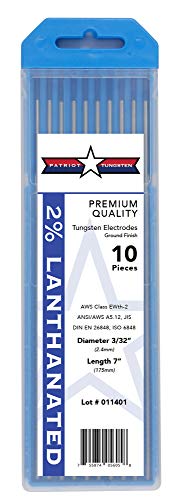
Patriot takes a restrained approach in the supplied product information. The electrode is identified as blue 2% lanthanated WL20, with a 3/32-inch size and AC/DC application claim. ANSI and AWS manufacturing standards are also mentioned. For a buyer comparing several blue electrodes, that concise specification set provides the key identity markers without adding a long list of unsupported use cases.
The listing has a packaging inconsistency worth checking. Its title describes a 10-pack, while the feature field says “Pack of 2.” Since quantity affects the purchase decision, shoppers should verify the actual package before ordering. Titanium is not specifically named in the supplied features, so this product is better viewed as a standards-focused lanthanated option that may suit a buyer whose own welding procedure already establishes the required material and current compatibility.
Pros
- Identified as blue 2% lanthanated WL20.
- 3/32-inch diameter is specified in the product title.
- AC and DC applications are stated.
- ANSI and AWS standards are referenced.
- The model identity is easy to distinguish by blue color and WL20 notation.
Cons
- The supplied quantity information conflicts between the title and feature field.
- Titanium alloy compatibility is not specifically stated in the supplied features.
This pick suits shoppers who value a clearly named 2% lanthanated WL20 electrode and standards references, provided the quantity is confirmed. A product with direct titanium wording is a safer match for buyers who want the listing itself to establish that application.
To buy this product, click here.
8. Midwest Tungsten Service Blue 2% Lanthanated 0.040-Inch — Best Very Small Diameter

The 0.040-inch diameter makes this Midwest Tungsten Service electrode the clearest specialist choice in the roundup. It is much narrower than the 1/16-inch, 3/32-inch, and 1/8-inch formats represented elsewhere, so it belongs in a different purchasing conversation. The product information identifies it as blue 2% lanthanated WL20/EWLa-2 and lists AC and DC use across titanium, aluminum, magnesium, nickel, copper, and steel-related applications.
That narrow size can be useful when the torch setup and welding procedure call for a very small electrode, but the listing does not supply an amperage range or a specific titanium thickness recommendation. The product information references an AWS standard, a certificate of conformance, and a materials safety data sheet. Those documentation references may appeal to shops that keep consumable records, while the 10-pack format gives the buyer several matching electrodes rather than a mixed assortment.
Pros
- 0.040-inch diameter is clearly identified.
- 2% lanthanated WL20/EWLa-2 composition is stated.
- Titanium alloys are included in the application list.
- AC and DC use are specified.
- AWS conformance documentation is referenced.
Cons
- The very small diameter may not match a torch setup requiring a larger electrode.
- No amperage range or titanium-specific procedure guidance is supplied.
This is the pick for buyers whose priority is the 0.040-inch format, especially where a larger 1/16-inch or 3/32-inch electrode would be unsuitable for the procedure. It should not be chosen simply because a smaller number sounds more precise. Verify that your collet, torch, and welding parameters are intended for this diameter.
To buy this product, click here.
9. WelderElite TIG Tungsten Gray 2% Ceriated 1/16-Inch — Best Ceriated Option

WelderElite gives titanium TIG buyers a clearly identified alternative to the many blue lanthanated products in this group. The listing names a gray 2% ceriated electrode, WC20/EWCe-2, in a 1/16-inch by 7-inch format. It lists both AC and DC welding and specifically includes titanium alloys among the supported materials. That combination makes the product easy to distinguish by both composition and diameter.
The product information describes quick arc striking, low burn-off, and resistance to splitting under high amperage. These are published product claims, not independently verified test results, but they explain the intended appeal of the ceriated formulation. Secure packaging and distinct color identification are also mentioned. Buyers who want a ceriated electrode should still check the procedure requirements for their particular machine because the listing does not provide a complete titanium welding parameter chart.
Pros
- 2% ceriated composition is clearly identified.
- 1/16-inch diameter and 7-inch length are specified.
- Titanium alloys are included in the stated application list.
- AC and DC compatibility is listed.
- AWS A5.12M/A5.12:2009 compliance is stated.
Cons
- The listing does not provide a recommended amperage range.
- Buyers seeking the more frequently represented 2% lanthanated composition will need a different product.
This is the natural choice for someone who specifically wants a gray 2% ceriated electrode in a compact 1/16-inch size. A blue lanthanated option offers more choices across the supplied diameter range, while this WelderElite product earns attention through its distinct composition and direct titanium application wording.
To buy this product, click here.
Buying Guide
Start With the Electrode Diameter
Diameter should be matched to the welding procedure, torch hardware, and expected electrical load rather than selected by brand alone. The products here range from 0.040 inch to 1/8 inch, with 1/16 inch and 3/32 inch appearing most often. A 0.040-inch electrode represents a distinctly smaller format, while a 1/8-inch electrode is a larger alternative. Check the collet and torch components before ordering, since an electrode that does not match the hardware creates a compatibility problem before the arc is even started.
Compare Composition Carefully
The roundup includes 2% lanthanated, rare-earth, ceriated, and red-coded products. A blue electrode with a clearly stated 2% lanthanated composition is easier to identify than a listing with conflicting classification information. The purple ARCCAPTAIN option names a rare-earth blend, while the WelderElite option identifies 2% ceriated tungsten. Red ARCCAPTAIN listings require extra caution because the supplied title and feature text do not agree on classification.
Check Whether Titanium Is Named
Several listings specifically include titanium alloys in their application information. That is useful evidence for this keyword, although it does not replace the welding procedure, machine manual, or qualified shop practice. Products that only state AC/DC compatibility without naming titanium should be treated more cautiously. A broad application claim may be useful, but it does not establish every possible machine, thickness, or current setting.
Match Current Type to the Procedure
The blue lanthanated, purple rare-earth, and gray ceriated options in this selection state AC and DC suitability. The red ARCCAPTAIN listings supplied here state DC use, and their classification details also need confirmation. Do not assume that the color alone proves current compatibility. Read the product’s stated classification and application information, then compare it with the requirements of the titanium job.
Think About Storage and Tip Protection
Vacuum packaging appears on several products, while the larger YESWELDER pack adds a sealed aluminum tube and a gasket intended to protect sharpened tips. Storage details do not change the electrode’s stated composition, but they may matter in a shop where tungsten is carried between work areas. Keep different colors and diameters separated so a blue 3/32-inch electrode is not confused with a gray 1/16-inch electrode during a rushed setup.
Handle Grinding Dust Responsibly
Preparing tungsten creates dust, and the product information does not establish a specific grinder, wheel, dust-control method, or safety certification for any of these electrodes. Use the preparation method and protective practices appropriate to your equipment and workplace. A product listing that mentions non-radioactive material should not be treated as a complete safety assessment for welding or grinding operations.
Best Tungsten for Titanium TIG Welding FAQ
What Is the Best Tungsten for Titanium TIG Welding?
Among these products, the ARCCAPTAIN blue 2% lanthanated 3/32-inch electrode is the strongest overall match because its supplied information identifies the composition, diameter, AC/DC use, and titanium alloy compatibility. The best choice for a particular job still depends on the required diameter and welding procedure.
Is 2% Lanthanated Tungsten Suitable for Titanium?
The supplied ARCCAPTAIN and Midwest listings identify 2% lanthanated electrodes for titanium alloy applications. Several other 2% lanthanated listings state AC/DC use without specifically naming titanium. Use the product information together with the requirements of your machine and procedure rather than treating every 2% lanthanated electrode as interchangeable.
Should I Choose 1/16 Inch or 3/32 Inch Tungsten?
That depends on the torch hardware and welding procedure. The supplied products identify both diameters, but they do not provide a universal amperage chart. Confirm the required collet size and procedure range before choosing between the narrower 1/16-inch format and the larger 3/32-inch format.
Are Purple Tungsten Electrodes Suitable for Titanium?
The ARCCAPTAIN purple EWG listing specifically includes titanium alloys and identifies AC/DC applications. It describes the electrode as a non-radioactive rare-earth blend. The exact rare-earth additives are not identified in the supplied information, so buyers who need a precisely defined composition should seek confirmation.
Are Red Tungsten Electrodes a Good Choice for Titanium?
The red ARCCAPTAIN listings include titanium alloys in their stated application information and identify DC use. However, the supplied title and feature text conflict about classification. Confirm the exact electrode identity before using it for a controlled titanium procedure.
Is Ceriated Tungsten an Option for Titanium TIG?
The WelderElite gray electrode is identified as 2% ceriated, WC20/EWCe-2, and its listing includes titanium alloys plus AC/DC use. It is a reasonable option for buyers seeking a ceriated formulation, provided its 1/16-inch diameter matches the torch and procedure.
Does Electrode Color Identify the Composition?
Color is used in these listings to distinguish products, with blue, purple, red, and gray examples supplied. Color should be checked against the written classification because the red ARCCAPTAIN information contains conflicting details. Read the complete label rather than relying on color alone.
Does a Longer Electrode Improve Titanium Weld Quality?
The products listed here are generally 7 inches long, but the supplied information does not establish that length improves weld quality. Diameter, composition, machine compatibility, preparation, and procedure requirements are more useful purchasing checks than length alone.
Final Verdict
The ARCCAPTAIN blue 2% lanthanated 3/32-inch electrode is the strongest overall recommendation for titanium TIG welding in this selection. Its product information gives the clearest combination of relevant details: 2% lanthanated composition, 3/32-inch diameter, 7-inch length, AC/DC applications, and titanium alloy compatibility. That makes it easier to compare with the rest of the field without filling gaps through guesswork.
Different priorities point elsewhere. The Midwest Tungsten Service electrode is the specialized choice for the stated 0.040-inch diameter, the YESWELDER 1/16-inch pack suits buyers seeking a smaller blue lanthanated format, and the WelderElite gray electrode provides a clearly identified ceriated alternative. The purple ARCCAPTAIN product is another option for a rare-earth blend. Before selecting any of them, verify diameter, classification, current type, and procedure compatibility for the specific titanium work.
