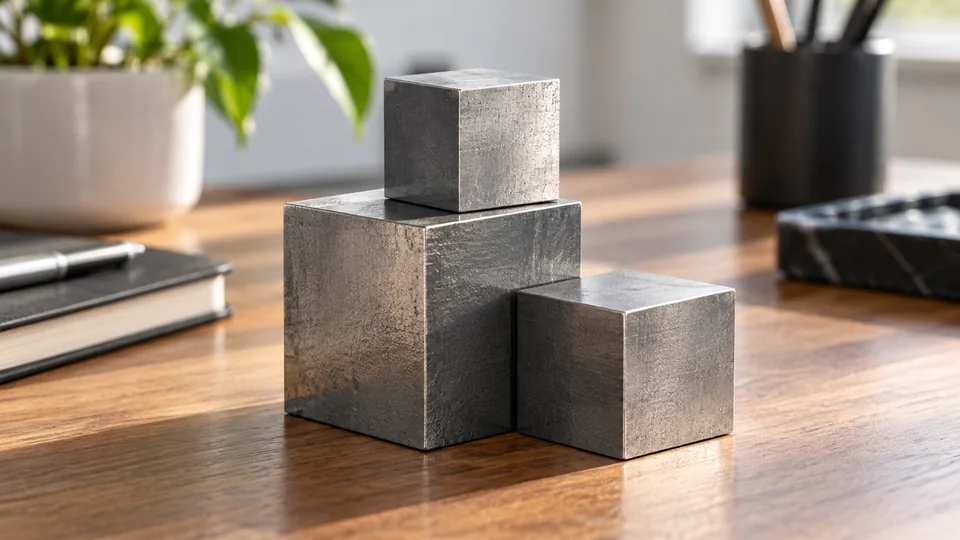
A tungsten cube is the sort of object that looks modest on a desk and feels startlingly substantial in the hand. Buyers seek one for a science demonstration, a conversation piece, a collector display, or the simple pleasure of experiencing how much mass can occupy a small geometric form. The main mistake is treating every cube as interchangeable. A 10mm block serves a very different purpose from an 18.88kg display piece, while a cube paired with aluminum or magnesium creates a comparison that a standalone cube cannot provide.
Size, stated material information, edge treatment, and the intended use deserve the closest attention. Rounded edges make a large cube easier to handle, while sharp right-angled edges may suit classroom demonstrations that depend on precise geometry. Comparative sets are especially useful for showing how two same-size objects can feel dramatically different, but a standalone cube may be the cleaner choice for a minimalist desk or collection. Product descriptions do not always identify every material detail, so the safest comparisons rely on the specifications each listing clearly provides.
The 1.5-inch Tungsten and Aluminum Cube Set is the strongest overall recommendation for most curious buyers because it combines a substantial one-kilogram tungsten cube with a much lighter same-size companion and includes bases for display. Buyers who want maximum scale should look toward the 4-inch cube, while the 10mm and 1-inch educational blocks make more practical starting points for demonstrations and compact collections.
Quick Answer
- Best Overall: Tungsten & Aluminum Cube Set, 1.5 Inch for its same-size weight comparison and included bases.
- Best Premium Display: The 4″ Tungsten Cube for its stated 41.62-pound mass and imposing scale.
- Best Compact Educational Pick: Tungsten Cube 10mm for its compact dimensions, stated 99.95% purity, and sharp right-angled edges.
- Best Large Comparison Set: Midwest Tungsten Service 2.5-Inch Tungsten & Aluminum Set for its large same-size material comparison and display stands.
Best Tungsten Cubes Comparison Table
| Product | Best For | Size | Stated Weight | Standout Feature |
|---|---|---|---|---|
| The 4″ Tungsten Cube | Maximum-scale collecting | 4 inches | 41.62 lb | Largest listed option |
| The 3″ Tungsten Cube | Large standalone display | 3 inches | 17.6 lb | Rounded edges |
| Tungsten Cube 2.5″ | Large collection displays | 2.5 inches | 10.19 lb | Standalone display cube |
| Midwest Tungsten Service 2-Inch + 1-Inch Set | Two-size comparison | 2 inches plus 1 inch | 5.2 lb for the 2-inch cube | Includes a 1-inch comparison cube |
| Tungsten Cube 1.5″ | Medium desk displays | 1.5 inches | 1 kilogram | Rounded edges |
| Tungsten & Aluminum Cube Set, 1.5 Inch | Material demonstrations | 1.5 inches each | 1 kg tungsten, 150 g aluminum | Same-size, different-weight pair |
| Tungsten and Magnesium Cube Set | Light-versus-heavy comparisons | 1.5 inches each | 2.2 lb tungsten, 0.22 lb magnesium | Includes bases |
| Tungsten Cube 10mm | STEM lessons and compact gifts | 10mm | Not clearly specified | Stated 99.95% pure tungsten |
| Tungsten Cube 25.4mm | Compact demonstrations | 25.4mm | Not clearly specified | Stated 99.95% pure tungsten |
The reviews below focus on the practical differences between scale, edge design, stated material information, and comparison value.
1. The 4″ Tungsten Cube — Best Premium Display

The 4-inch cube is aimed at buyers who want the visual drama of a very large tungsten object. Its listed mass is 41.62 pounds, or 18.88 kilograms, which moves it far beyond the usual desk curiosity. A cube this substantial is better understood as a display centerpiece that requires a stable, suitable surface rather than an everyday handling object. The rounded edges described by the listing make contact more manageable, yet the sheer mass still demands care during placement.
For a collector assembling several sizes, this model provides a dramatic top end beside smaller cubes. It also suits a classroom, office, or exhibit where the point is immediate scale and physical impact. The product information calls it a tungsten cube and identifies its weight, but it does not provide a detailed composition or purity specification. That makes its appeal primarily about size, mass, and presence rather than a precise materials study.
Pros
- Largest cube in this roundup by stated dimensions and weight.
- Stated mass of 41.62 pounds makes the scale immediately apparent.
- Rounded edges support more manageable hand contact.
- Useful as a centerpiece for a large collection or display.
- Complements smaller cubes from the same general product range.
Cons
- Its very high mass limits portability and casual handling.
- The listing does not clearly identify tungsten purity or detailed alloy composition.
This is the pick for a collector who wants the largest visual statement and has a dependable place to display it. A buyer seeking a hands-on classroom object or compact desk piece should choose one of the smaller cubes instead. The trade-off is straightforward: maximum scale brings maximum handling and placement demands.
To buy this product, click here.
2. The 3″ Tungsten Cube — Best Large Standalone Cube
The 3-inch cube offers a substantial step up from small desk curiosities without reaching the extreme scale of the 4-inch model. Its stated weight is 17.6 pounds, or 7.96 kilograms, giving it the kind of heft that turns a simple handoff into a memorable demonstration. Rounded edges make the object more approachable for display and occasional handling, although the weight still makes a stable shelf or desk location sensible.
This standalone format works well for someone who wants the cube itself to remain the focus. There is no same-size aluminum or magnesium companion competing for attention, so the presentation is cleaner and more sculptural. The listing highlights display use and collection building, while the available information does not specify purity or a detailed alloy breakdown. Buyers should therefore select it for its stated dimensions, mass, and rounded construction.
Pros
- Large 3-inch format creates a strong display presence.
- Stated 17.6-pound weight gives it substantial physical impact.
- Rounded edges are identified for safer handling.
- Standalone design keeps the display visually simple.
- Suitable for expanding a collection with a major size step.
Cons
- Heavy enough that routine relocation is inconvenient.
- The product information does not specify purity or complete composition.
Choose this model if a large standalone cube sounds more appealing than a comparison set. It is easier to place than the 4-inch version, yet it remains far too substantial for casual everyday carry. Buyers who want a more accessible teaching tool should look at the 1-inch or 10mm options.
To buy this product, click here.
3. Tungsten Cube 2.5″ — Best Mid-Scale Display

The 2.5-inch cube occupies an interesting middle ground. Its stated 10.19-pound weight is enough to create the classic “small object, huge mass” reaction, while its dimensions remain less imposing than the 3-inch and 4-inch models. That balance makes it a natural fit for a collector who wants scale without jumping immediately to the largest available cube.
The listing presents this as a standalone display piece and mentions comparison with a same-size aluminum cube, although the aluminum companion is not part of this product. That distinction matters. This purchase gives you the tungsten cube alone, so the buyer can keep the display spare or add a comparison object separately. The listing identifies rounded edges but does not establish purity or a complete material formula.
Pros
- 2.5-inch size offers substantial visual scale.
- Stated 10.19-pound weight creates a clear mass demonstration.
- Rounded edges support more comfortable handling than sharp corners.
- Standalone format suits shelves, desks, and collections.
- Smaller and more manageable than the 3-inch and 4-inch cubes.
Cons
- The 10.19-pound mass still makes frequent movement impractical.
- The listing does not identify tungsten purity or detailed composition.
This is a sensible choice for a collector who wants a serious display cube without choosing the biggest model. It may be excessive for a child’s science lesson or a crowded office desk, where a compact cube would be easier to position. Its central trade-off is size with manageable, though still considerable, weight.
To buy this product, click here.
4. Midwest Tungsten Service Tungsten Cube Set, 2 Inch + 1 Inch — Best Two-Size Set
This set gives the buyer two tungsten cubes in different sizes, creating a simple scale comparison without introducing another metal. The larger cube is listed at 2 inches and 5.2 pounds, or 2.36 kilograms, while the smaller cube is supplied as a comparison piece. That arrangement works nicely for a desk demonstration where visitors can see and feel how size changes the object’s presence.
Rounded edges are identified on the cubes, which supports handling during a lesson or conversation. The set is also more flexible than a single 2-inch cube because the smaller piece can occupy a separate shelf, sit beside the larger one, or help establish scale in a display. The product information describes an aerospace-grade tungsten alloy, but it does not provide a specific alloy formula or purity percentage.
Pros
- Includes both a 2-inch cube and a 1-inch comparison cube.
- The larger cube has a stated 5.2-pound weight.
- Two sizes create a useful scale demonstration.
- Rounded edges are identified on the cubes.
- More display flexibility than a single-cube purchase.
Cons
- The larger cube is still heavy for casual carrying or frequent relocation.
- The listing does not provide a detailed alloy composition or purity figure.
This set suits teachers, collectors, and desk owners who want two related objects rather than one large centerpiece. A buyer seeking a same-size material comparison should choose the aluminum or magnesium sets instead. The key compromise is that the set favors size comparison, not material contrast.
To buy this product, click here.
5. Tungsten Cube 1.5″ – One Kilogram — Best Standalone Desk Cube

The 1.5-inch cube is a compact standalone object with a stated mass of one kilogram. That combination makes it easier to place on a desk or shelf than the larger display pieces, while preserving the tactile surprise that makes tungsten cubes interesting. The product description calls it an aerospace-grade tungsten alloy cube and identifies rounded edges for handling.
Its appeal is simplicity. There is no second material to explain and no large footprint to accommodate, so the cube can function as a quiet desk object until someone picks it up. The listing does not state a specific alloy percentage or purity grade, which matters for buyers seeking a materials-focused specimen. For general collecting and conversation, the one-kilogram format is the central attraction.
Pros
- Compact 1.5-inch format fits many display locations.
- Stated one-kilogram weight provides a clear tactile contrast with its size.
- Rounded edges are identified for safer handling.
- Standalone design keeps the presentation uncluttered.
- Useful as a medium-size foundation for a cube collection.
Cons
- The listing does not identify a specific alloy composition or purity percentage.
- Buyers seeking a same-size comparison will need a separate companion cube.
This model fits a buyer who wants a substantial object without dedicating a shelf to a multi-kilogram cube. The aluminum set is more informative for classroom comparisons, while this standalone version is cleaner for personal display. Its central trade-off is focused simplicity over demonstration range.
To buy this product, click here.
6. Tungsten & Aluminum Cube Set – 1.5″ — Best Overall

This set makes the most immediate physical lesson in the roundup. Both cubes are 1.5 inches, but the listing identifies the tungsten cube as one kilogram and the aluminum cube as 150 grams. Because the dimensions match, the difference is felt rather than merely read from a label. A teacher can pass them around during a materials lesson, while a collector can display them as a compact study in mass and material contrast.
The slightly rounded edges support handling, and bases are included for display. That combination gives the set more purpose than a standalone cube, particularly for buyers who want guests or students to interact with the objects. The product information does not state the precise composition or purity of the tungsten cube, so the strongest supported reason to choose it is the clearly described size-and-weight comparison.
Pros
- Both cubes share the same stated 1.5-inch size.
- Stated weights create a clear tungsten-versus-aluminum contrast.
- Includes bases for display.
- Slightly rounded edges support handling.
- Useful for teaching, gifting, and desk demonstrations.
Cons
- The listing does not identify a detailed tungsten purity or alloy percentage.
- The comparative format may be less appealing to buyers who want a single minimalist cube.
This is the strongest general recommendation because it turns the cube into an experience rather than a static ornament. Pick the standalone 1.5-inch cube if comparison is unnecessary, or choose the larger 2.5-inch set for a more imposing display. Here, the trade-off is the extra companion piece and bases in exchange for much greater explanatory value.
To buy this product, click here.
7. 1.5″ Tungsten and Magnesium Cube Set — Best Lightest Comparison

The magnesium comparison set uses two cubes with the same stated 1.5-inch size, then separates them dramatically by weight. The listing identifies the tungsten cube at 2.2 pounds and the magnesium cube at 0.22 pounds. That ten-to-one stated weight relationship gives the set a strong teaching angle, especially for anyone who wants a physical demonstration that size alone tells only part of a material’s story.
Bases are included, and the edges are described as slightly rounded. Those details make the set suitable for a display that may be handled periodically, although the published information does not provide a detailed composition for either cube beyond the material names used in the product title. Compared with the aluminum set, this option offers a lighter companion and a different material pairing, which may matter to educators and collectors building a varied group.
Pros
- Both cubes share the same stated 1.5-inch dimensions.
- Stated 2.2-pound and 0.22-pound weights create a strong contrast.
- Includes bases for display.
- Slightly rounded edges support handling.
- Provides a distinct alternative to an aluminum comparison set.
Cons
- The listing does not identify detailed composition or purity percentages.
- The smaller companion may feel too light for buyers seeking two substantial objects.
This set makes sense for demonstrations where the contrast between heavy and light needs to be immediately obvious. The aluminum set may be preferable for buyers who want a 150-gram companion, while a standalone cube is better for a simpler display. Its defining compromise is educational contrast over a matched pair of substantial weights.
To buy this product, click here.
8. Tungsten Cube 10mm (0.39 Inch) — Best Compact Educational Pick

The 10mm cube is the most compact option here, making it easier to store, transport, or place beside other small specimens. Its listing states 99.95% pure tungsten, a polished metallic finish, and right-angled edges. Those sharp corners distinguish it from the rounded display cubes and may suit a classroom or laboratory demonstration where the cube’s geometry needs to be clearly defined.
Its small footprint also changes the buying logic. This is less about commanding a desk and more about presenting a compact example of a dense metal or giving a science enthusiast a small collectible. The product information does not state the cube’s weight, so buyers should not assume a particular mass from the dimensions alone. The strongest supported attractions are the stated purity, size, finish, and educational positioning.
Pros
- Compact 10mm size is easy to store and transport.
- Listing states 99.95% pure tungsten.
- Right-angled edges support precise geometric demonstrations.
- Polished metallic finish suits display use.
- Positioned for STEM education, laboratory demonstrations, and collecting.
Cons
- The product information does not specify the cube’s weight.
- Sharp corners may be less suitable for casual handling than rounded-edge designs.
This is the best fit for a buyer who values compact size and clearly stated purity information over display scale. A larger rounded cube will create a stronger tactile impression, while this block is easier to include in a lesson kit or small collection. Its trade-off is precision and portability at the expense of visual presence.
To buy this product, click here.
9. Tungsten Cube 25.4mm (1 Inch) — Best Compact Mid-Size Block
This 25.4mm cube provides a larger educational surface than the 10mm model while retaining a compact one-inch format. The listing states 99.95% pure tungsten, a polished metallic finish, and right-angled edges. For a teacher or collector, that combination makes the block easy to display while preserving the crisp, machined appearance associated with a geometric density specimen.
The sharp-corner construction gives it a different character from the rounded 1-inch cube listed elsewhere in this category. That is a meaningful distinction for demonstrations focused on shape and measurement, although it also means handling deserves more attention. The product information does not state a weight, so buyers should rely on the listed size and material description rather than assume a particular mass.
Pros
- One-inch format is compact but easier to see than the 10mm block.
- Listing states 99.95% pure tungsten.
- Right-angled edges suit precise geometric demonstrations.
- Polished finish supports desk and display use.
- Positioned for STEM teaching, laboratory use, and collecting.
Cons
- The cube’s weight is not clearly specified in the product information.
- Sharp edges offer less handling forgiveness than rounded cube designs.
Choose this block when one inch feels like the better classroom or display scale and stated purity matters. The 10mm cube is easier to carry and store, while the rounded-edge 1-inch option may suit casual handling better. This model’s central advantage is the balance between compact size, clear geometry, and stated material purity.
To buy this product, click here.
Buying Guide
Match the Cube to the Intended Use
A classroom demonstration benefits from a cube that is easy to move, identify, and explain. The 10mm and 25.4mm blocks are compact, while the 1.5-inch comparison sets add a clear hands-on lesson about how different materials can share dimensions yet feel very different. Large standalone cubes are better suited to permanent displays where scale is the main attraction.
Decide Between a Standalone Cube and a Comparison Set
Standalone models keep attention on the tungsten object itself. They suit minimalist desks, shelves, and collections built around increasing size. Comparison sets add context. Aluminum and magnesium companions make the difference in weight immediately understandable, while the 2-inch and 1-inch set demonstrates scale within the same general material category.
Pay Attention to Edge Design
Rounded edges appear on several larger display cubes and can make occasional handling more approachable. The 10mm and 25.4mm educational blocks are described with right-angled edges instead. Sharp geometry can be useful for measurement and shape demonstrations, but it calls for more deliberate handling and placement.
Use Stated Weight Carefully
Several large products publish a specific mass, including the 4-inch, 3-inch, 2.5-inch, 2-inch, and 1.5-inch models. The smaller educational blocks do not clearly state their weight in the available information. Avoid comparing an unspecified block with a listed 1kg or 10.19-pound cube as though the missing figure were known.
Check Material Information
The listings use different levels of material description. Some identify a tungsten alloy, some state 99.95% pure tungsten, and some provide only the product name and general tungsten wording. Those statements should not be treated as interchangeable. Buyers seeking a materials demonstration should favor the products with the clearest relevant description.
Plan the Display Surface
A 41.62-pound cube needs a very different home from a 10mm block. Large models should be placed where their mass will not create a handling problem, while the sets with bases are easier to present as deliberate display pieces. Measure the intended surface and think about how often the object will be moved before selecting a large cube.
Best Tungsten Cubes FAQ
What makes a tungsten cube interesting?
A tungsten cube concentrates substantial mass into a compact geometric form. The appeal is partly visual and partly tactile. A small cube can feel unexpectedly heavy, while a same-size aluminum or magnesium companion makes that contrast easier to understand.
Are all tungsten cubes made from pure tungsten?
No. The available listings use different descriptions. The 10mm and 25.4mm products state 99.95% pure tungsten, while other listings describe a tungsten alloy or do not provide a detailed composition. Read the specific product information rather than applying one material description to every cube.
Which cube is best for a science demonstration?
The 1.5-inch Tungsten and Aluminum Cube Set is a strong choice because both cubes are listed at the same size while their stated weights differ considerably. The magnesium set offers another clear contrast. For a compact single specimen, the 10mm and 25.4mm blocks provide stated purity and defined geometry.
Are rounded edges better than sharp edges?
That depends on the activity. Rounded edges are more suitable for a display object that may be picked up, while right-angled edges can help with precise shape-focused demonstrations. Neither design is automatically better for every buyer.
What is the largest cube in this roundup?
The 4-inch Tungsten Cube is the largest listed option. Its product information states a weight of 41.62 pounds, or 18.88 kilograms. That scale makes it a specialty display object rather than a convenient portable cube.
Should I buy a cube with an aluminum or magnesium companion?
Choose a comparison set if the educational or conversational value of contrasting materials matters to you. A standalone cube is simpler for a minimalist display and avoids adding a second object. The aluminum and magnesium sets are more informative for showing how equal dimensions can conceal major differences in weight.
Do the smaller cubes include a stated weight?
The 10mm and 25.4mm listings supplied here do not clearly state their weights. The 1.5-inch standalone cube is identified as one kilogram, and several larger models provide specific masses. Buyers who need a known weight should choose a product with that figure published.
Final Verdict
The 1.5-inch Tungsten and Aluminum Cube Set is the strongest overall pick because its two same-size cubes turn an abstract materials lesson into something people can feel immediately. The listing provides clear dimensions and weights, includes bases, and gives the set a useful role in teaching, gifting, or desk display. Its purpose is easy to understand, and the scale remains more practical than the largest standalone cubes.
Different priorities point elsewhere. The 4-inch cube is the premium display choice for maximum mass and scale, while the 10mm cube is better for compact STEM use and states 99.95% pure tungsten. The magnesium set offers a particularly stark light-versus-heavy comparison, and the 2.5-inch standalone model sits between moderate display scale and the imposing larger cubes. Match the purchase to the space available, the need for a comparison object, and the level of material detail that the listing actually confirms.
